
Technical Guide
Updated:
JCB / Backhoe vs Excavator: Choose for the Work
Choose by excavation geometry, loading needs and safe access. A backhoe suits some mixed jobs; a tracked excavator may suit sustained excavation, subject to machine class and site assessment.
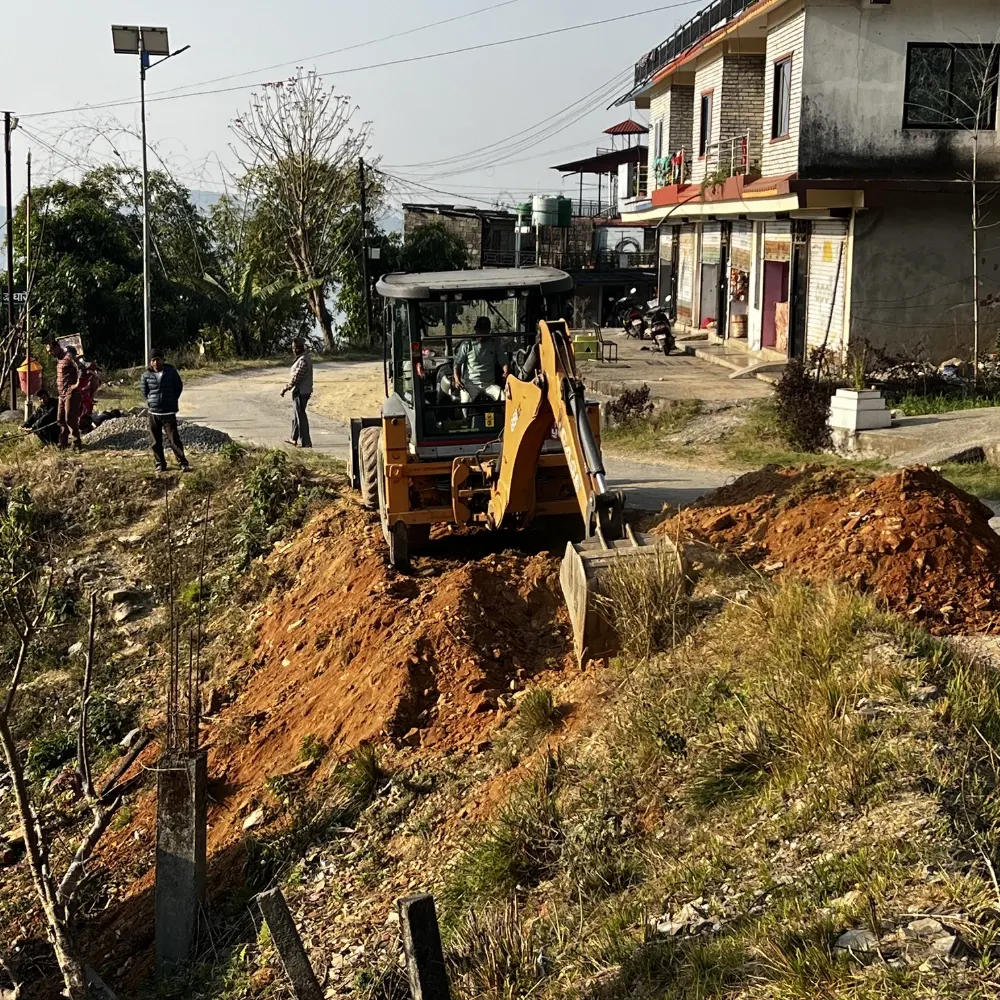
Choose by excavation geometry, loading needs and safe access. A backhoe suits some mixed jobs; a tracked excavator may suit sustained excavation, subject to machine class and site assessment.
Published by: Jwala Nirman Sewa
Practical context: construction execution, measurement, BOQ and infrastructure-work experience in Nepal.
Editorial review:
Compare functions and working space
A front loader helps a backhoe handle stockpiles while its rear arm digs. An excavator’s digging arrangement and swing envelope require different clearances. Do not select from brand name alone; check digging depth, reach, attachment and the operator’s view of the work zone against the proposed machine.
Match the machine to the sequence
For a house site, excavation, spoil loading and final trimming may need different methods. A mini excavator is an informational option for restricted sites, not a statement of Jwala availability. Confirm the access route and working platform before comparing hire costs.
Worked planning example
Before requesting a quotation
Practical checklist
- Measure gate width and turning area.
- Identify depth, reach and spoil-loading position.
- Review nearby structures and utilities with the technical team.
Note: Actual work should follow the signed contract, approved drawings, BOQ, specifications, authorized engineer’s instructions, and applicable public-procurement and safety requirements.
Reference basis
Confirm the edition, current notices and signed documents that apply to your project.
Frequently Asked Questions
Which is best for a house foundation?
There is no universal choice. Foundation dimensions, soil, access and the disposal arrangement determine the suitable machine and method.
Related Resources
Related Resources
Road Construction in Pokhara and Gandaki Province
Practical guidance on road construction in Pokhara and Gandaki: survey, excavation, drainage, sub-base, bitumen, QA/QC, and hill-terrain planning.
Read guideGabion Wall and Stone Masonry Works in Nepal
How gabion and stone masonry works are planned, constructed, measured, and quality-checked for roads, slopes, drains, and river protection in Nepal.
Read guideIrrigation Canal Upgradation Works in Nepal
Planning and execution of canal upgradation in Nepal, including flow diversion, excavation, lining, structural repair, outlets, measurement, and QA/QC.
Read guideRoad Upgrading Process: Excavation, Sub-base, Drainage and Bitumen Works
A stage-by-stage road upgrading guide covering excavation, formation, drainage, sub-grade, sub-base, compaction, bitumen works, measurement, and quality control.
Read guideLandslide Clearance and Hill Road Protection Works in Nepal
Safe planning for landslide clearance, roadway excavation, spoil management, drainage, gabion, masonry, and slope protection on Nepal hill roads.
Read guideHow Contractors Manage Price Rise in Bitumen, Fuel and Construction Materials
How contractors plan procurement, records, cash flow, rate exposure, and contract compliance when bitumen, fuel, cement, steel, and aggregates rise in price.
Read guide