
Technical Guide
Updated:
Construction Measurement & Estimation: Formulas and Worked Examples
A practical reference for concrete, steel, earthwork, road, masonry, equipment and bill calculations, with units, assumptions and interactive tools.
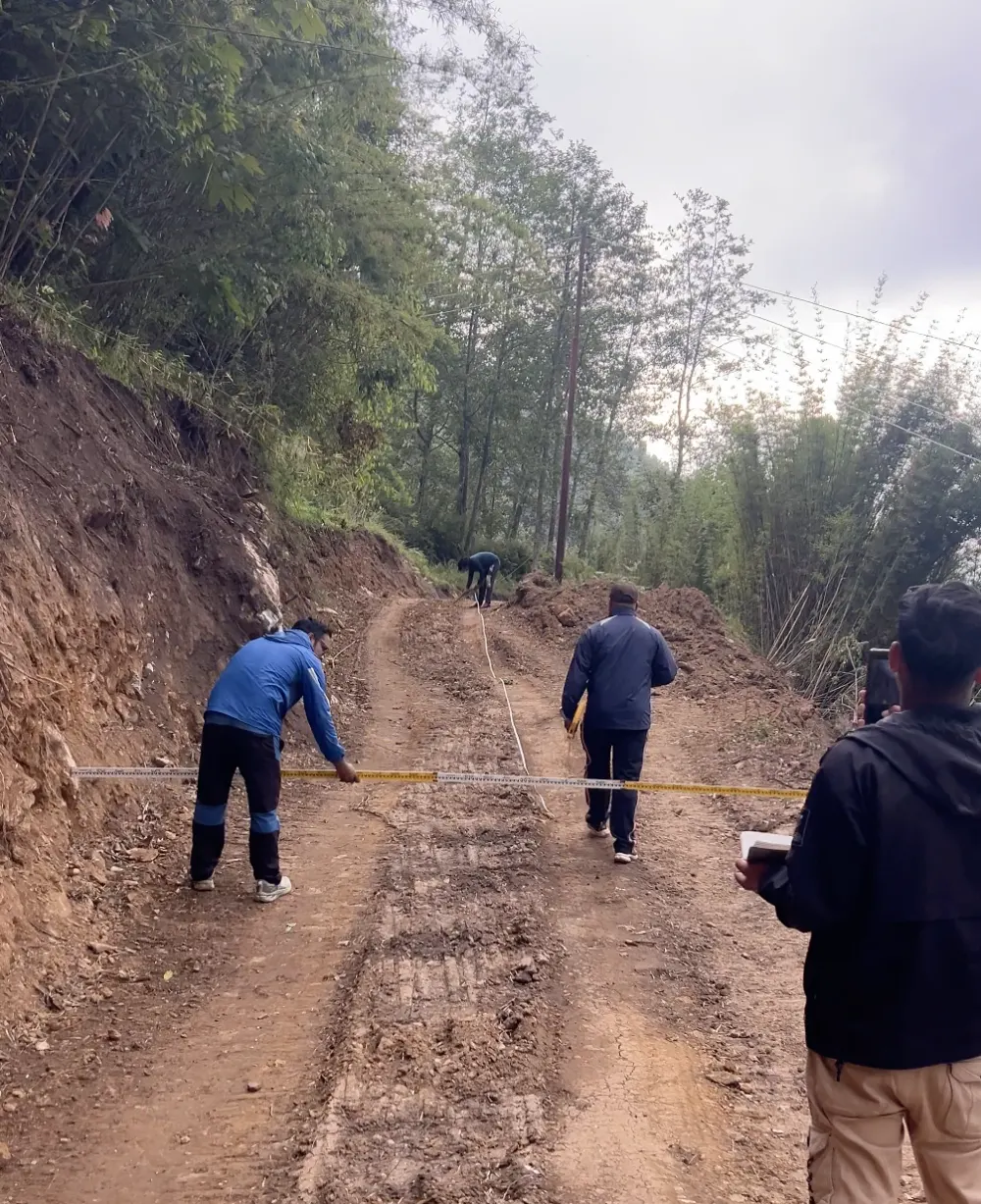
Start with a measurement basis: the drawing revision, unit, deductions and physical state of the material. Compute quantities before prices, keep assumptions visible and check the result against site records. These examples are arithmetic aids, not design approvals or certified bills.
Published by: Jwala Nirman Sewa
Practical context: construction execution, measurement, BOQ and infrastructure-work experience in Nepal.
Editorial review:
House Construction Cost Calculator Nepal
Total area = built-up area per floor × number of floors (assuming equal floor areas). Planning range = total area × your lower and upper rates. Location, level and site condition provide scope context; no unverified multipliers are applied.
This is an indicative planning estimate only. Actual construction cost depends on drawings, structural requirements, materials, site access, market rates and scope.
Tipper Trip Calculator
Effective volume = quantity × bulking factor × (1 + allowance% / 100). Trips = ceiling(effective volume / usable capacity).
Use m³ for quantity and usable capacity per trip.
Concrete Calculator
Wet volume = element dimensions. Dry volume ≈ wet volume × 1.54 × (1 + waste%). Materials are divided by the selected nominal mix ratio.
Nominal mixes are planning references, not a substitute for an approved mix design.
Earthwork Calculator
Base volume = length × width × depth. Adjusted volume = base volume × (1 + adjustment% ÷ 100).
Use surveyed cross-sections for irregular earthwork.
Asphalt Calculator
Area = road length × width. Volume = area × compacted thickness. Mix mass = volume × entered density.
Enter compacted thickness in millimetres.
Excavation Calculator
Rectangular volume = length × width × depth. Trapezoidal volume uses the average of bottom and top widths. Trips = volume ÷ truck capacity, rounded up.
Truck trips are approximate and depend on legal capacity and material bulking.
Gabion Calculator
Structure volume = length × width × height. Boxes = structure volume ÷ selected box volume, rounded up. Stone volume includes the entered waste allowance.
Actual box arrangement must follow drawings, lifts, diaphragms, and lacing details.
Steel Weight Calculator
Unit weight (kg/m) = diameter² ÷ 162. Total weight = unit weight × length × number of bars.
The d²/162 relation is a standard estimating approximation for nominal bar diameter.
BOQ Calculator
Subtotal = quantity × rate. VAT = subtotal × entered VAT%. Grand total = subtotal + VAT.
Confirm whether the BOQ rate is VAT-inclusive or VAT-exclusive.
Running Bill Calculator
Current value = current quantity × rate. Retention = current value × retention%. VAT = current value × VAT%. Net payable = current value + VAT − retention.
Previous bill is displayed for cumulative context but is not deducted again from the entered current quantity.
Road Quantity Calculator
Area = length × formation width. Each layer volume = area × thickness. Waste allowance is applied to material quantities.
Thickness inputs are compacted design thicknesses in millimetres.
Masonry Calculator
Wall volume = length × height × thickness. Nominal mortar percentage varies by masonry type; dry mortar uses a 1.33 factor.
Unit counts are approximate and depend on actual sizes, bond, joints, and openings.
Culvert Calculator
Pipe count uses culvert length ÷ pipe segment length. Concrete uses annular pipe volume or slab volume. Excavation uses a simple working-space envelope.
This is not a hydraulic design tool.
Equipment Productivity Calculator
Effective productivity = rated productivity × efficiency%. Required hours = quantity ÷ effective productivity. Days = hours ÷ working hours per day.
Productivity should reflect material, haul distance, access, operator, and site constraints.
Labour Cost Calculator
Each labour cost = workers × daily wage × days. Extra percentage is applied to the combined base labour cost.
Use current agreed wage rates and applicable labour requirements.
Note: Actual work should follow the signed contract, approved drawings, BOQ, specifications, authorized engineer’s instructions, and applicable public-procurement and safety requirements.
Frequently Asked Questions
Can calculator outputs be used directly for a final bill?
Reconcile outputs with approved drawings, contractual measurement rules, joint records and authorized certification first.
Related Resources
Related Resources
Road Construction in Pokhara and Gandaki Province
Practical guidance on road construction in Pokhara and Gandaki: survey, excavation, drainage, sub-base, bitumen, QA/QC, and hill-terrain planning.
Read guideGabion Wall and Stone Masonry Works in Nepal
How gabion and stone masonry works are planned, constructed, measured, and quality-checked for roads, slopes, drains, and river protection in Nepal.
Read guideIrrigation Canal Upgradation Works in Nepal
Planning and execution of canal upgradation in Nepal, including flow diversion, excavation, lining, structural repair, outlets, measurement, and QA/QC.
Read guideRoad Upgrading Process: Excavation, Sub-base, Drainage and Bitumen Works
A stage-by-stage road upgrading guide covering excavation, formation, drainage, sub-grade, sub-base, compaction, bitumen works, measurement, and quality control.
Read guideLandslide Clearance and Hill Road Protection Works in Nepal
Safe planning for landslide clearance, roadway excavation, spoil management, drainage, gabion, masonry, and slope protection on Nepal hill roads.
Read guideHow Contractors Manage Price Rise in Bitumen, Fuel and Construction Materials
How contractors plan procurement, records, cash flow, rate exposure, and contract compliance when bitumen, fuel, cement, steel, and aggregates rise in price.
Read guide